TREE TRIMMING
TREE TRIMMING IN ASHEVILLE, NC
Timing is everything with pruning, and most trees respond best when cuts are made in the dormant window from late fall into early spring, when stress runs lowest and wounds seal fastest. Mountain Bear AVL provides tree trimming for homeowners and property owners throughout Asheville, NC, shaping canopies, clearing deadwood, and lifting limbs off roofs and walkways. With 10+ years of proper cuts behind us, we trim to protect a tree's long-term structure, never leaving the stubbed, topped look that weakens growth.
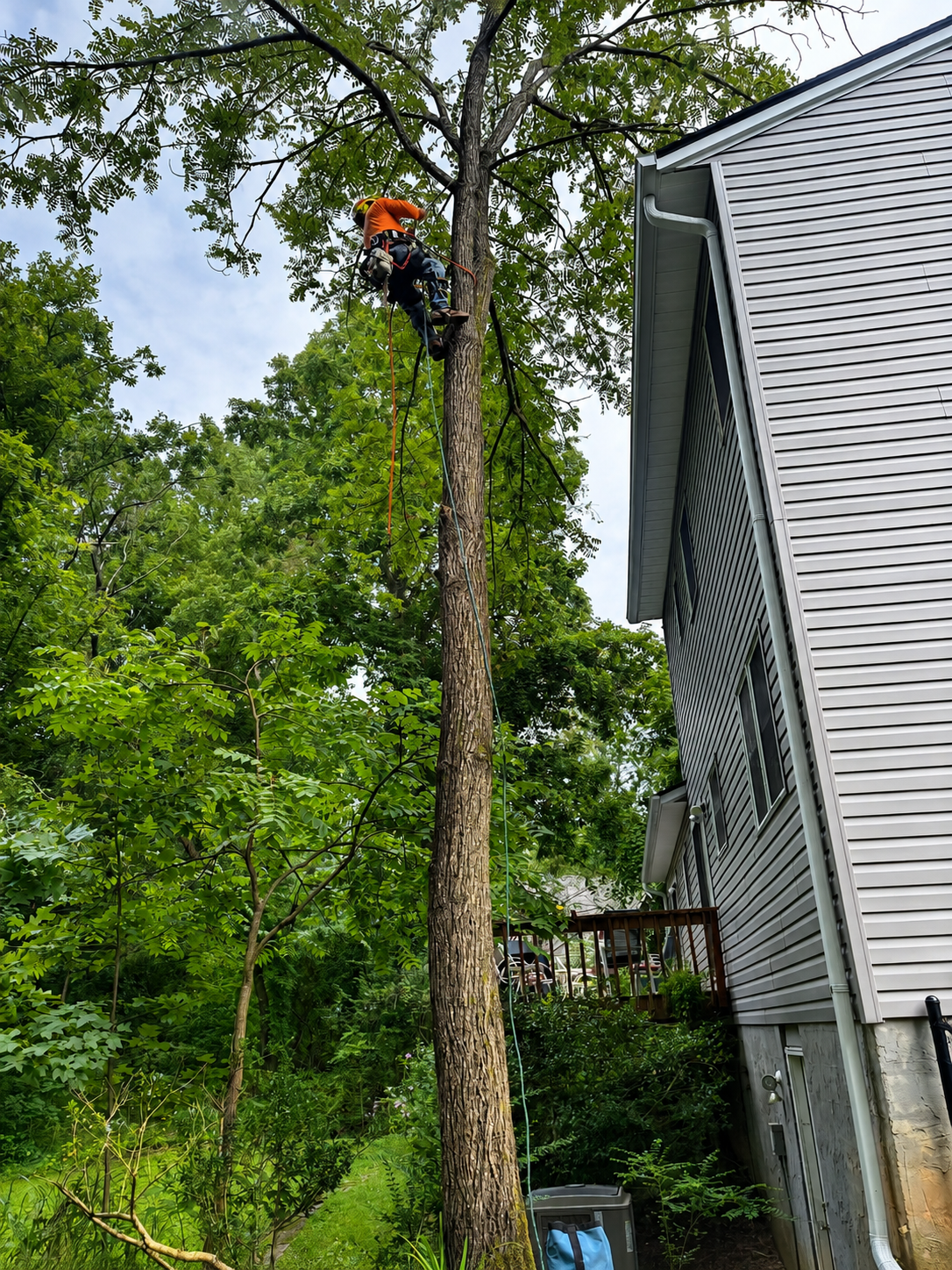
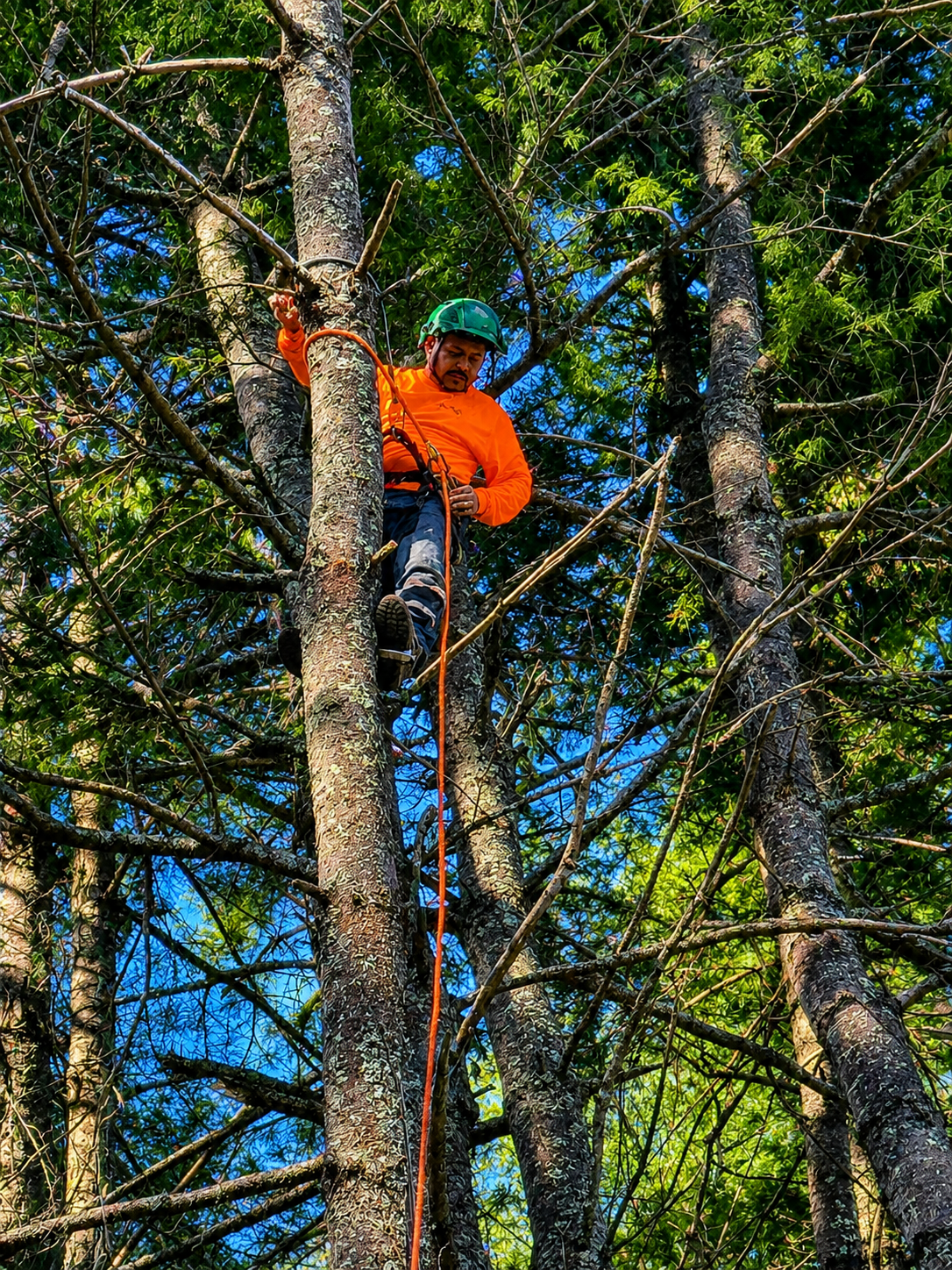
GOOD TRIMMING ADDS YEARS TO A TREE'S LIFE.
The right cuts do far more than tidy a canopy. They remove weak and crossing limbs before they fail, steer growth away from your home, and let light and air move through in a way that keeps the whole tree healthier and stronger.
Done consistently, that care compounds. A well-pruned tree resists storms better, sheds fewer surprise limbs, and holds its shape and value far longer than a neglected one.
- Deadwood and weak limbs removed
- Canopy thinned for light and airflow
- Cuts placed to protect structure
- Roofs and walkways cleared safely
TREE TRIMMING
SHAPING TREES THAT HAVE TO STAND UP TO WEATHER.
A canopy in the mountains carries loads a sheltered yard never sees, wind funneled through valleys, wet snow, and the drag of a full summer crown. Trimming with that in mind is different from a cosmetic haircut. We thin dense growth so wind passes through instead of pushing the whole tree, shorten overextended limbs before they crack, and open the structure so your trees bend with the weather rather than breaking under it.
PRUNING THAT SUITS ASHEVILLE'S TREES AND SEASONS.
The oaks, poplars, maples, and pines around Asheville each want different handling, and the calendar matters as much as the cut. We match our timing to the species and the season, pruning for structure while trees are dormant and holding off on stressed, late-summer growth. That local knowledge keeps your trees vigorous instead of merely shortened.
STRAIGHT ANSWERS ON WHAT A TREE ACTUALLY NEEDS.
In 10+ years of trimming, we have learned that the best pruning is often the most restrained. We do not remove healthy wood just to run up a bill, and we will tell you plainly when a tree needs only a light touch or nothing at all this year. Over-thinning stresses a tree and invites weak, whippy regrowth, so we cut with a purpose behind every limb. You get a tree that looks intentional, stays strong, and keeps its natural form.
WHAT SMART TRIMMING GIVES BACK.
STRONGER STRUCTURE
Removing weak forks and crossing limbs while a tree is young or mid-life builds a frame that holds. Good structural cuts today prevent the split trunks and torn limbs that expensive failures are made of later.
FEWER FALLEN LIMBS
Deadwood and cracked branches are the pieces that come down in the next storm. Taking them out on purpose, on the ground, means far fewer of them landing on your roof, car, or lawn by surprise.
MORE LIGHT AND AIR
Thinning a dense canopy lets sunlight reach the lawn and garden below and moves air through the branches. Grass grows better, mildew fades, and the tree itself breathes easier through the humid months.
A CLEARER PROPERTY
Lifting low limbs off the roof, drive, and walkways stops the scraping, the clogged gutters, and the constant ducking. You reclaim the space around and under your trees without losing the shade they provide.
BETTER-LOOKING TREES
A balanced, well-shaped canopy simply looks cared for, and it lifts the whole property with it. Thoughtful trimming keeps a tree's natural form rather than forcing an awkward silhouette that never quite recovers.
HEALTHIER GROWTH
Clean cuts at the right points direct a tree's energy into strong, well-placed limbs. Instead of feeding weak or crowded growth, the tree invests in the branches that will carry it soundly for years to come.
WHAT WE TRIM
OUR TREE TRIMMING WORK
From routine shaping to targeted problem-solving, these are the trimming services Asheville property owners rely on, each performed with proper cuts that respect how a tree actually grows.
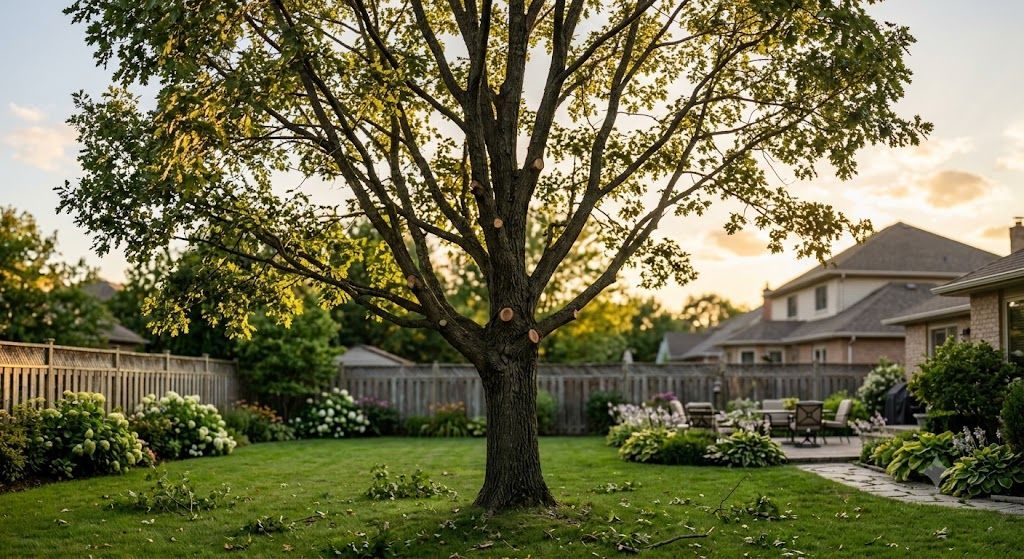
CANOPY HEALTH
Crown Thinning
We selectively remove interior and crossing branches to open the canopy without changing its overall shape. Better light and airflow move through, wind load drops, and the tree keeps its natural outline while shedding the crowded growth that strains it.
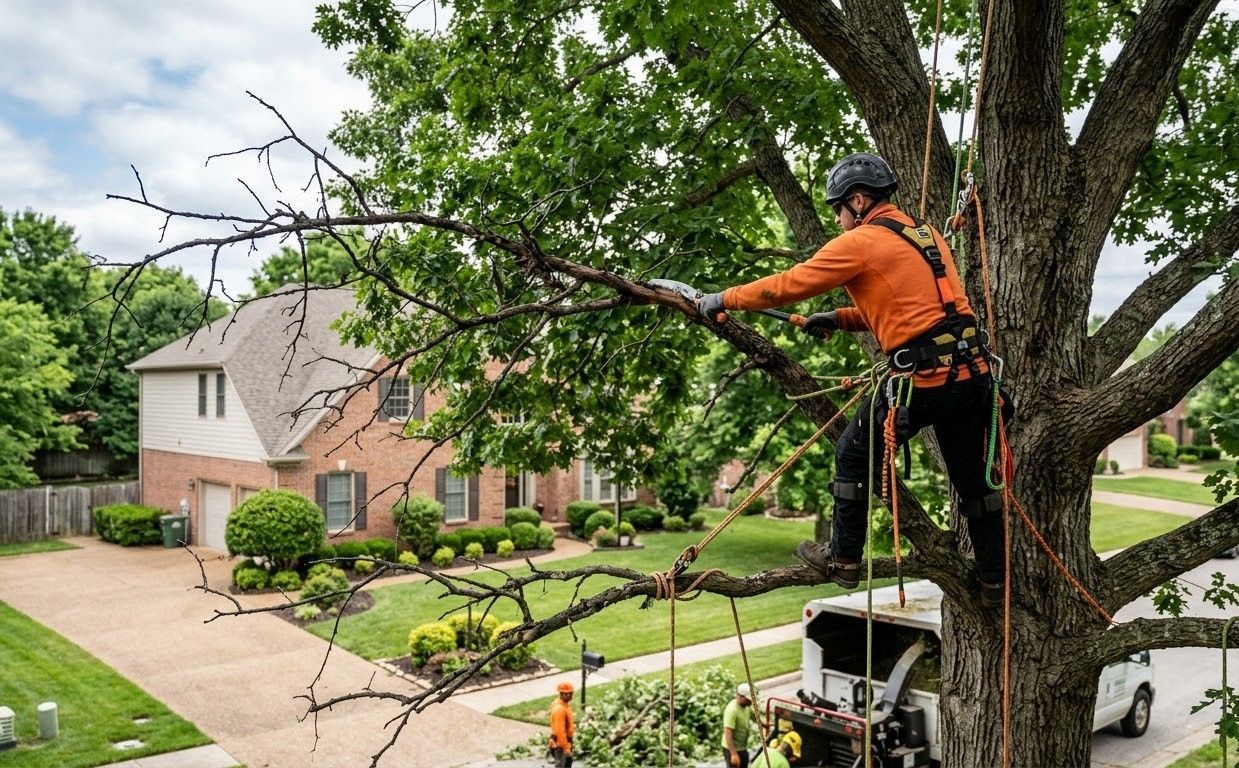
DEAD LIMBS
Deadwood Removal
Dead and dying branches are removed before they drop, cleaning the canopy of the limbs most likely to fail. The tree looks healthier immediately, and the hazard of falling deadwood over your yard is taken off the table.
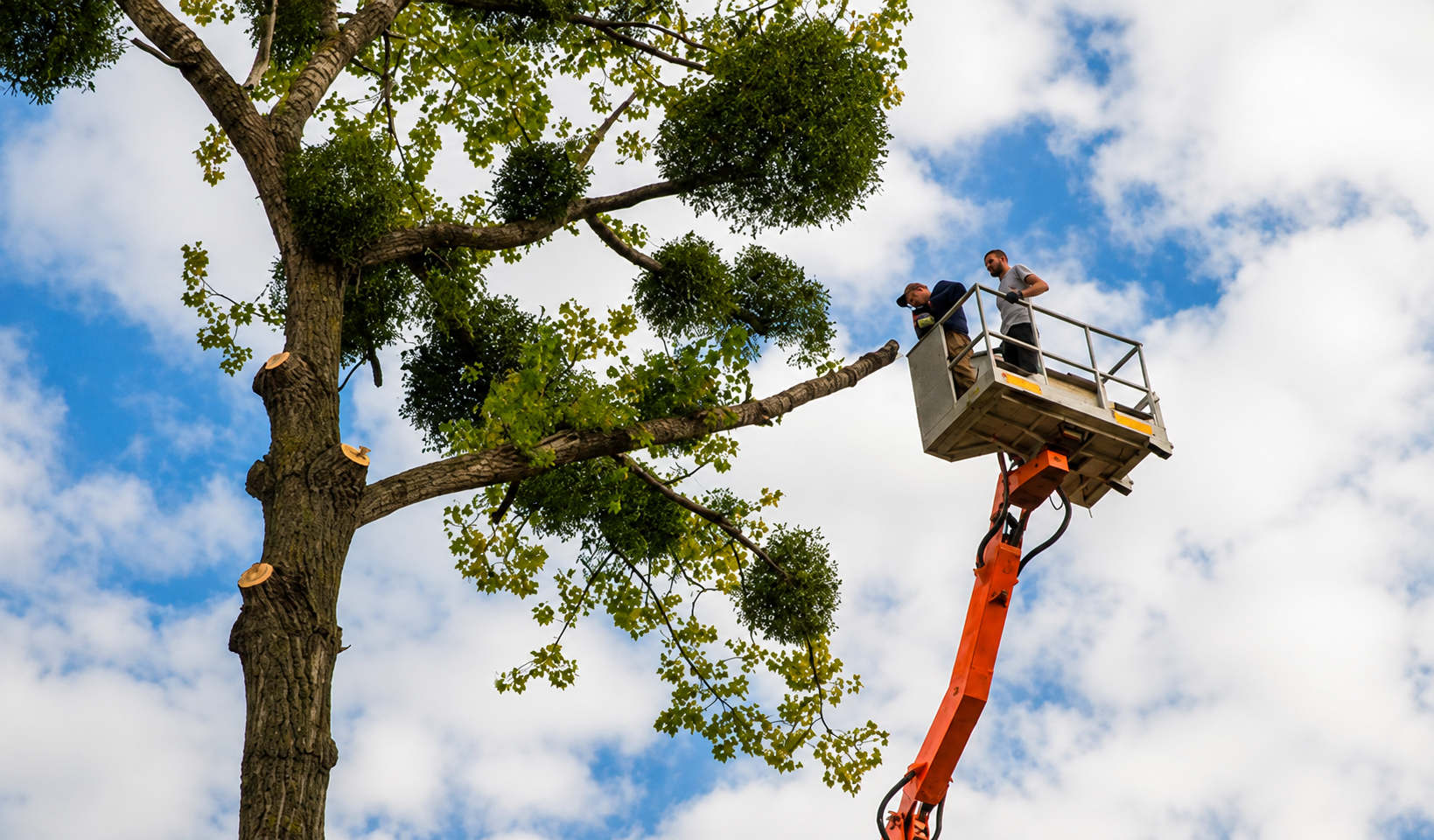
HEAD ROOM
Canopy Raising
We lift the lower limbs to create clearance over driveways, sidewalks, and rooflines. You gain head room and sightlines below the tree while the upper canopy stays full, balancing access with the shade you want to keep.
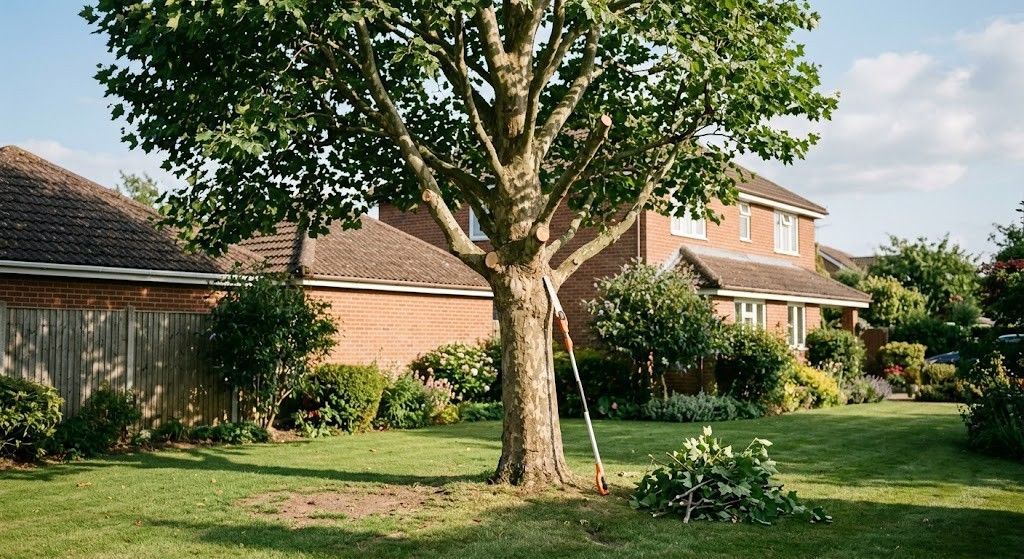
SIZE CONTROL
Crown Reduction
When a tree has outgrown its space, we shorten limbs back to healthy growth points to reduce its spread. This eases weight on overextended branches and manages size without the damage that harsh topping always causes.
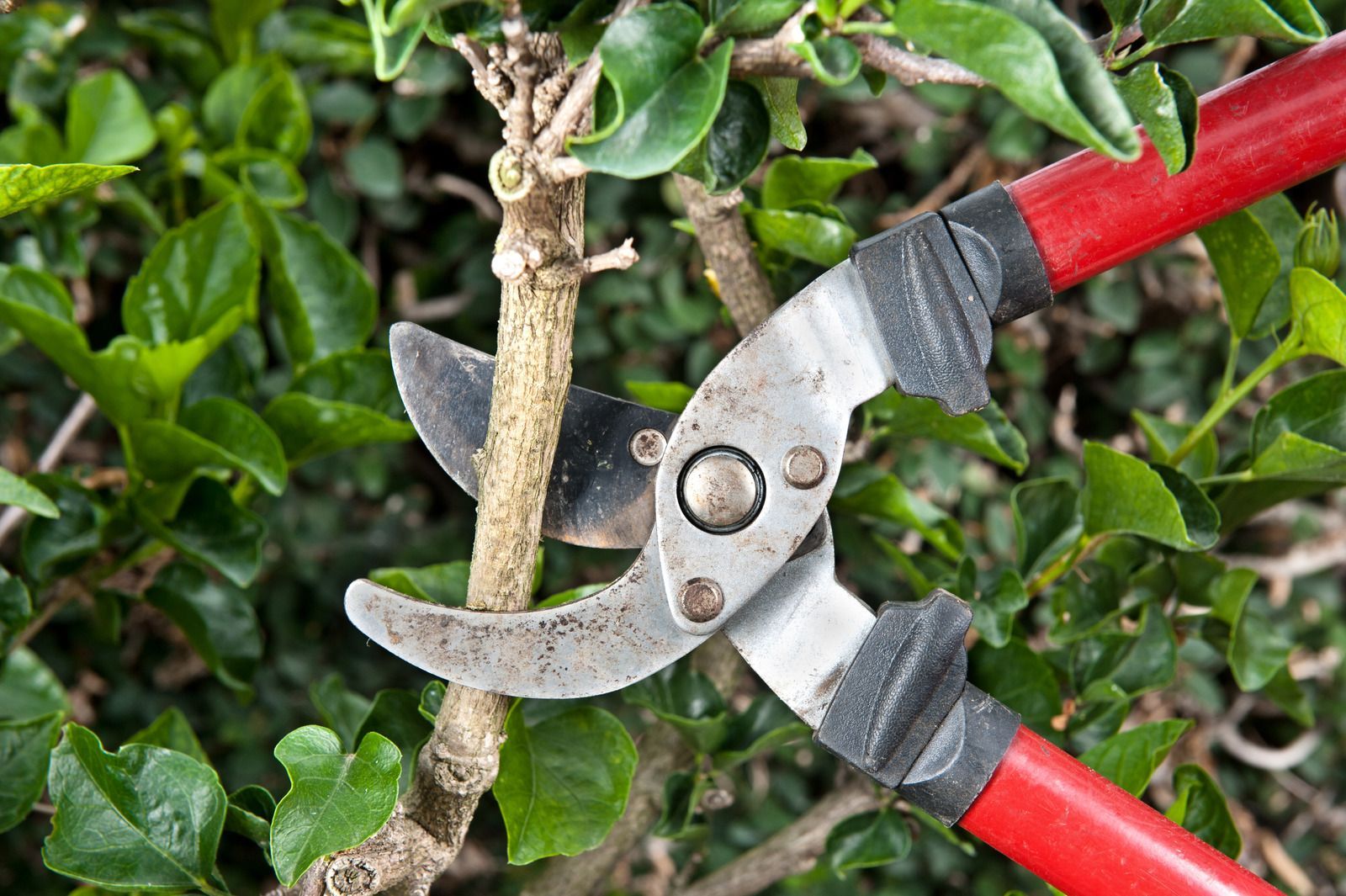
YOUNG TREES
Structural Pruning
Early, well-planned cuts train a young tree toward one strong central leader and sound branch spacing. Shaping structure now prevents the weak unions and crowded limbs that lead to breakage and costly correction down the road.
ROOF LINE
Clearance Trimming
We prune limbs back from your roof, gutters, siding, and chimney to stop scraping, leaf buildup, and easy rodent access. Cuts are made at healthy points so the canopy stays balanced while your home gets breathing room.
Common Questions
FREQUENTLY ASKED QUESTIONS.
Common questions about how, when, and how much to trim, so you know what to expect from a pruning visit and how to keep your trees healthy between them.
How much can you safely trim off a tree at once?
As a rule, we avoid removing more than about a quarter of a live canopy in a single season. Cutting beyond that stresses the tree and triggers weak, excessive regrowth, so restraint protects its long-term health.
Will trimming my tree help it survive storms?
Yes, when it is done correctly. Thinning lets wind pass through the canopy instead of pushing the whole tree, and removing deadwood eliminates the limbs most likely to break free and cause damage in a storm.
Does pruning hurt or stress the tree?
Proper cuts at the right locations heal cleanly and cause little stress, much like careful surgery. Poor cuts, topping, or over-thinning are what harm a tree, which is exactly why technique and timing matter so much.
How do I know if my tree needs trimming?
Look for deadwood, limbs touching the house or blocking paths, a lopsided or overly dense canopy, and branches rubbing together. Any of these are good reasons to schedule a look before the problems compound.
Is topping a tree ever a good idea?
No. Topping strips a tree of its structure and forces weak, fast regrowth that is more hazardous than what you started with. When size is the concern, proper crown reduction is the safe alternative we use instead.
How often should trees be trimmed?
Most mature shade trees benefit from structural pruning every three to five years, while young, fast-growing trees may want it more often. Mountain Bear AVL can set a sensible interval for your trees in Asheville, NC.
Can you trim large trees without climbing damage?
Yes. Our climbers use gear designed to protect bark and cambium, and we rig limbs down rather than letting them tear free. The tree is left with clean cuts and no wounds from the removal itself.
Why should I trust Mountain Bear AVL with my tree trimming?
Because restraint and proper cuts beat aggressive shortcuts every time, and that conviction guides our work. Across Asheville, NC, Mountain Bear AVL shapes your trees to stay strong, healthy, and true to their natural form.
HOW WE WORK
FROM FIRST BRANCH TO FINISHED CANOPY, HERE IS HOW.
STEP 01
Inspect the Tree
We begin by examining the tree's health, structure, and surroundings, noting deadwood, weak unions, clearance issues, and species-specific needs. That assessment defines exactly which cuts will help and which are best left alone.
STEP 02
Set the Pruning Plan
Based on what we find, we decide the goals, thinning, raising, reducing, or clearing, and how much to remove this season. You hear the plan and the reasoning before we ever start cutting.
STEP 03
Time It Right
Where the work is not urgent, we schedule around the tree's ideal window, favoring dormant-season cuts for structure and avoiding stressful timing. Right timing lets each wound seal quickly and keeps the tree vigorous.
STEP 04
Make Clean, Precise Cuts
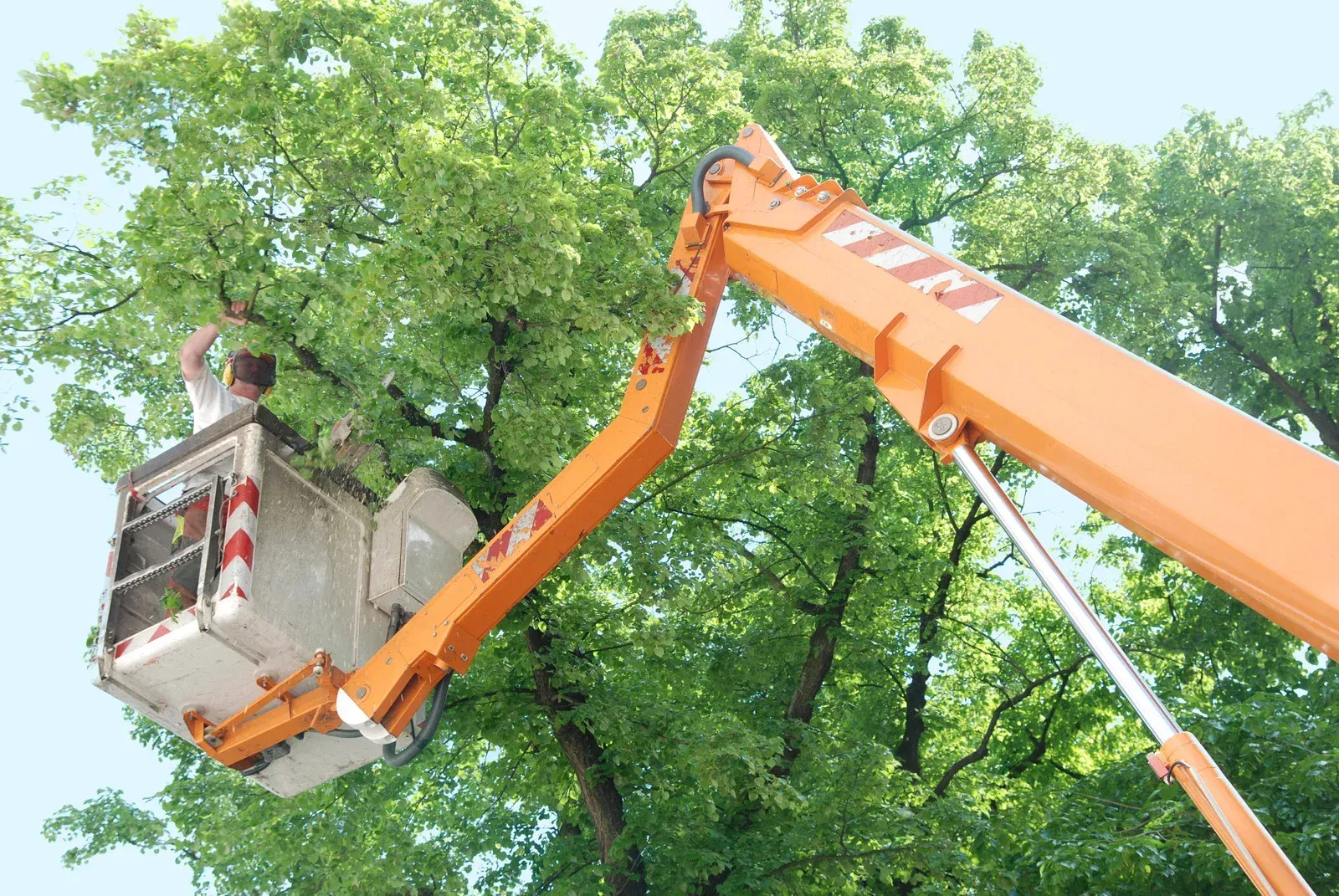
Our climbers work through the canopy making proper cuts at the branch collar, never leaving stubs. Each limb is placed with intention so the tree keeps its balance, strength, and natural shape throughout.
STEP 05
Clear the Trimmings
As branches come down, we gather and haul away every limb and pile of brush. The lawn and beds beneath the tree are left raked and clean, with no trace of the work behind.
STEP 06
Review the Results
Finally we step back with you to look over the finished canopy, confirm the clearance and shape, and share tips for keeping the tree healthy until its next trim.
Get Your Free Estimate
GET A HEALTHIER CANOPY PRICED OUT, FREE.
Ready to give your trees the care they need to stay strong and shapely? Reach out through our contact page, and we will assess your canopy, recommend only the cuts that help, and provide a written estimate at no charge.
WHAT YOUR ESTIMATE COVERS:
✓ A canopy and structure assessment
✓ A clear plan of recommended cuts
✓ Honest advice on timing and amount
✓ Written pricing with no surprises
✓ Full cleanup of all trimmings
✓ Tips to keep your trees healthy